
Introduction
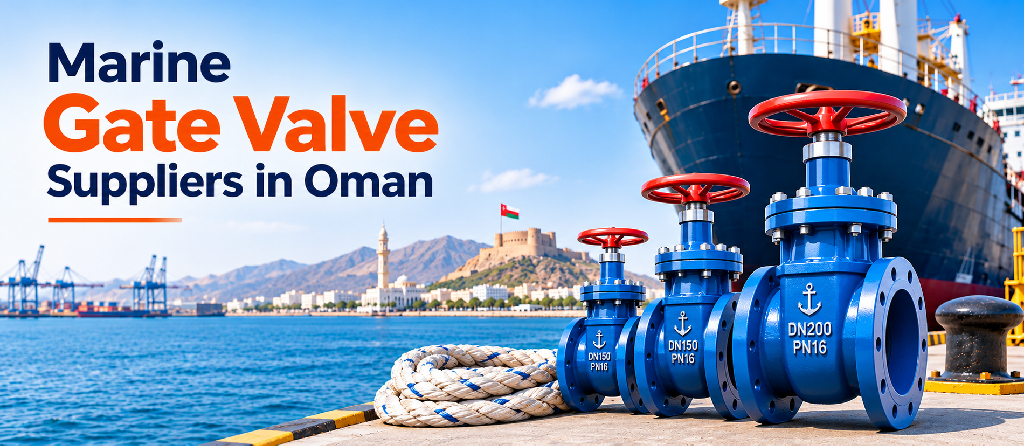
Marine gate valves are essential components in shipboard piping systems, offshore installations, and marine engineering operations. They help control the movement of liquids through pipelines by providing reliable shut-off when required. From seawater systems to ballast pipelines and other suitable fluid-handling applications, selecting the right valve is important for maintaining operational efficiency and safety.
For shipowners, marine engineers, shipyards, and procurement managers, finding dependable marine gate valve suppliers in Oman is an important part of equipment purchasing and maintenance. The right supplier should provide suitable products, technical documentation, material specifications, and dependable delivery arrangements.
This buyer’s guide explains the key factors to consider when purchasing marine gate valves and how to choose a supplier that meets your vessel or project requirements.
What Is a Marine Gate Valve?
A marine gate valve is a mechanical valve that uses a movable gate or wedge to open or close the flow passage within a pipeline. When fully open, it generally provides a relatively unobstructed flow path with low pressure loss. It is primarily designed for isolation rather than precise flow regulation.
Marine gate valves are commonly used in applications such as:
- Seawater and freshwater pipelines
- Ballast water systems
- Bilge and drainage systems, where suitable
- Shipboard cooling water circuits
- Marine utility and service water lines
- Selected oil and cargo-handling systems, subject to valve specifications
The correct valve depends on the fluid, operating pressure, temperature, pipeline dimensions, and applicable marine requirements.
1. Choose Suppliers with Marine Industry Experience
The first step in finding reliable marine gate valve suppliers in Oman is to assess their experience in marine equipment and ship supply. Marine applications can involve saltwater exposure, vibration, changing operating conditions, and demanding maintenance schedules.
A supplier familiar with marine equipment can help identify valves suitable for the intended service and provide relevant product information. This is particularly valuable for ship repair contractors, vessel operators, offshore service providers, and shipyards.
Before making a purchase, review the supplier’s product range, industry experience, technical support, and ability to coordinate marine equipment deliveries. Ask whether the supplier can source the required valve type and provide documentation for your project.
2. Check Valve Materials and Corrosion Resistance
Material selection is one of the most important considerations when buying marine gate valves. Saltwater and humid marine environments can accelerate corrosion, making material compatibility essential for reliable performance.
Common materials include:
- Bronze: Used in many marine applications, including suitable seawater and utility systems.
- Cast iron: May be appropriate for specified low-pressure marine services when material and coating requirements are satisfied.
- Ductile iron: Offers strength and may be suitable for applications with the appropriate corrosion protection.
- Cast steel: Used in selected applications requiring particular pressure and temperature capabilities.
- Stainless steel: Can be suitable for certain corrosive environments, depending on the grade and service conditions.
The valve body, gate, stem, seat, and internal components must be compatible with the fluid and operating environment. Do not assume that a valve is suitable for seawater simply because it is marketed for marine use.
Ask suppliers for the material specifications and confirm that the complete valve assembly meets your application requirements.
3. Verify Standards, Testing, and Certification
When purchasing marine gate valves, buyers should verify that the products meet the technical requirements of the vessel, shipyard, or project.
Depending on the application, relevant requirements may include recognised valve standards, marine design specifications, pressure-testing requirements, and classification society approvals.
Before placing an order, ask for the applicable documents, such as:
- Product datasheets and technical drawings
- Material test certificates, where required
- Pressure-test and inspection reports
- Manufacturer declarations and traceability records
- Classification society certificates, where applicable
Classification requirements may involve organisations such as DNV, ABS, Bureau Veritas, or Lloyd’s Register. However, approval requirements differ by product and application, so the exact certificate scope should be confirmed.
Working with a supplier that can provide the required documentation helps procurement teams verify product suitability and maintain project records.
4. Select the Correct Valve Size and Pressure Rating
Choosing the correct valve specifications is essential for safe installation and reliable operation. A valve that does not match the pipeline or operating conditions can create compatibility problems and increase maintenance costs.
Before requesting a quotation, identify the following details:
- Nominal pipe diameter or DN size
- Required pressure rating
- Operating temperature
- Fluid type and service conditions
- Flange standard and connection dimensions
- Face-to-face dimensions
- Required material and valve design
- Quantity and delivery location
Marine gate valves may be available in different configurations, including rising-stem and non-rising-stem designs. The suitable option depends on installation space, maintenance access, and the system’s operating requirements.
Provide the supplier with an existing valve nameplate, technical drawing, or equipment specification wherever possible. This can help reduce the risk of ordering an incompatible replacement.
5. Compare Product Quality and Total Cost
Price is an important purchasing factor, but the cheapest valve may not provide the best long-term value. Differences in materials, manufacturing quality, pressure ratings, documentation, and expected service life can influence the overall cost of ownership.
When comparing quotations from marine gate valve suppliers in Oman, ensure that all suppliers are quoting equivalent specifications.
Consider:
- Initial purchase price
- Product quality and material suitability
- Required certificates and inspection records
- Availability of spare parts
- Warranty conditions
- Delivery charges and lead times
- Maintenance requirements
A clear quotation should specify the valve model, size, material, pressure rating, quantity, applicable standards, and delivery terms. This makes it easier to compare offers accurately and make an informed procurement decision.
6. Evaluate Stock Availability and Delivery Support
Timely delivery is particularly important for ship repairs, scheduled maintenance, and offshore projects. Delays in receiving replacement valves can affect maintenance schedules and vessel operations.
When evaluating marine gate valve suppliers in Oman, ask about current stock availability, sourcing arrangements, estimated lead times, and delivery options to your required port or facility.
If the valve is needed for urgent maintenance, communicate the required delivery date before confirming the order. Also, verify that the quoted product is available in the specified size, material, and pressure class.
A supplier with clear communication and organised delivery coordination can help procurement teams plan maintenance activities more effectively.
7. Consider After-Sales Support and Maintenance
Marine valves require appropriate inspection and maintenance throughout their service life. Before purchasing, check whether the supplier can provide technical documentation, replacement parts information, and guidance on routine maintenance.
Gate valves should be operated according to the manufacturer’s instructions and used primarily for isolation unless the manufacturer specifically permits the intended alternative duty. Using a gate valve for prolonged throttling can damage internal components and affect sealing performance.
Ask about warranty terms, product replacement procedures, and access to suitable spare parts. These considerations can help reduce maintenance complications and support more effective equipment management.
Why Consider Merline Marine for Marine Valve Supply?
Businesses sourcing marine equipment for Oman need suppliers that understand the practical requirements of vessel operations, ship maintenance, and marine procurement.
Merline Marine supplies marine equipment and lists gate valves among its marine valve offerings. Its website also describes its ship supply activities across the UAE, Saudi Arabia, Oman, and Qatar.
For buyers looking for marine gate valve supply solutions, Merline Marine is a useful point of contact for discussing product requirements, sourcing options, and delivery arrangements.
Visit Merline Marine to explore its marine supply services. Before placing an order, contact the company to confirm the availability, specifications, applicable documentation, and delivery arrangements for the required gate valve.
Frequently Asked Questions
1. How do I choose the best marine gate valve suppliers in Oman?
Compare marine industry experience, product quality, material compatibility, technical documentation, required certifications, pricing, delivery schedules, and after-sales support. Confirm that the offered valve matches your operating requirements.
2. What are marine gate valves used for?
Marine gate valves are primarily used to isolate pipeline sections in suitable shipboard and offshore systems, including selected seawater, freshwater, ballast, cooling water, and utility pipelines.
3. Which material is best for marine gate valves?
The best material depends on the fluid, pressure, temperature, and corrosion exposure. Bronze, cast iron, ductile iron, cast steel, and stainless steel may be suitable for different applications when correctly specified.
4. What information is needed to order a marine gate valve?
Provide the required size, pressure rating, valve type, body and internal materials, connection standard, operating conditions, quantity, and delivery location. Include technical drawings or the existing valve’s identification details if available.
5. Do marine gate valves require certification?
Certification depends on the vessel, project specifications, applicable standards, and classification requirements. Buyers should confirm which material certificates, test reports, and classification approvals are required before ordering.
6. Can marine gate valves be used in seawater systems?
Yes, suitably designed marine gate valves can be used in seawater systems. The materials, pressure rating, sealing arrangement, and other specifications must be appropriate for the actual service conditions.
Conclusion
Choosing reliable marine gate valve suppliers in Oman involves more than comparing prices. Buyers should carefully evaluate material compatibility, valve specifications, product quality, certification requirements, technical support, and delivery reliability.
By preparing clear technical requirements and comparing equivalent products, shipowners, marine engineers, and procurement managers can make informed purchasing decisions and source valves suited to their applications.
For marine equipment sourcing enquiries, visit Merline Marine to learn more about its supply services and discuss your marine valve requirements.