
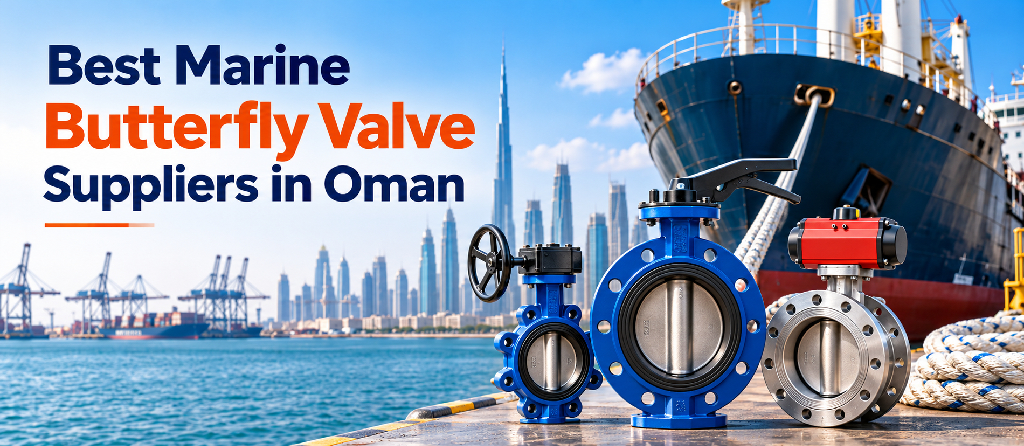
Marine butterfly valves play an important role in controlling fluid flow across ships, offshore platforms, marine engineering systems, and industrial facilities. From seawater circulation to ballast and cooling water systems, these valves help maintain efficient operations, reliable flow control, and safe working conditions. Choosing the right marine butterfly valve suppliers in Oman is therefore essential for shipowners, marine contractors, shipyards, and industrial procurement teams.
With demanding marine environments, equipment buyers need valves that can withstand corrosion, pressure variations, and continuous operation. A dependable supplier should offer suitable products, technical guidance, quality documentation, and timely delivery. This guide explains the key factors to consider when selecting a marine butterfly valve supplier in Oman.
What Is a Marine Butterfly Valve?
A marine butterfly valve is a flow-control device that uses a rotating disc to regulate or stop the movement of liquids through a pipeline. Its compact design, relatively low weight, and ease of operation make it suitable for various marine and offshore applications.
Marine butterfly valves are commonly used in:
Seawater and cooling water systems
Ballast water systems
Bilge and drainage systems
Firefighting water pipelines
Fuel and lubrication systems, where the valve design is suitable
Shipbuilding and offshore engineering projects
The correct valve depends on the application, operating pressure, temperature, fluid type, and relevant marine specifications.
1. Check the Supplier’s Marine Industry Experience
The first step is to evaluate the supplier’s experience in marine equipment and industrial valve solutions. Marine applications often require specialised products that can perform reliably in challenging operating conditions.
Experienced marine butterfly valve suppliers should understand the requirements of shipyards, vessel operators, offshore contractors, and marine maintenance teams. They should also be able to help buyers identify suitable valve configurations based on the intended installation.
Before choosing a supplier, review its product portfolio, industry experience, technical support capabilities, and history of serving marine-related businesses. A supplier with relevant experience can help reduce procurement errors and improve equipment compatibility.
2. Verify Product Quality and Material Compatibility
Marine environments expose valves to moisture, saltwater, vibration, and corrosion. Selecting appropriate materials is essential for long-term performance and operational reliability.
When evaluating butterfly valves, consider the following components:
Valve body: Common options include cast iron, ductile iron, bronze, and stainless steel, depending on the application.
Disc: Material selection should account for corrosion resistance, fluid compatibility, and operating conditions.
Seat and seals: Elastomers or other sealing materials must be suitable for the fluid, temperature, and pressure.
Stem: The material should provide appropriate strength and corrosion resistance.
Do not assume that one material is suitable for every marine system. For example, seawater applications may require different material combinations from freshwater or fuel-handling applications. Ask the supplier for material specifications and compatibility information before purchasing.
3. Confirm Marine Standards and Certifications
Quality assurance is an important consideration when purchasing marine butterfly valves. Depending on the project and installation, valves may need to comply with specified international standards, classification society requirements, or vessel-owner specifications.
Ask suppliers whether the offered products have the required documentation, which may include material certificates, inspection reports, pressure-test records, and manufacturer documentation.
Where applicable, confirm compliance with relevant ISO or other recognised standards and requirements from classification societies such as DNV, ABS, or Lloyd’s Register. Certification requirements vary according to the valve type, application, and project.
Reliable documentation helps procurement teams verify product suitability, maintain traceability, and meet project or regulatory requirements.
4. Evaluate the Available Valve Types and Specifications
Marine butterfly valves are available in different designs to accommodate specific installation and operating requirements.
Common types include:
Wafer butterfly valves: Compact valves installed between pipeline flanges.
Lug butterfly valves: Valves with threaded lugs that can support certain installation and maintenance arrangements.
Flanged butterfly valves: Valves connected through integral flanges, depending on the design.
Concentric butterfly valves: Commonly used for general-purpose flow-control applications.
High-performance butterfly valves: Designed for applications requiring particular pressure, temperature, or sealing performance.
When comparing marine butterfly valve suppliers in Oman, check whether they can provide the required valve size, pressure rating, connection type, operating mechanism, and applicable technical specifications.
Manual, pneumatic, and electric actuation options may be available depending on the product range. Always confirm compatibility with the intended pipeline and control system.
5. Assess Technical Support and Product Documentation
A good supplier should provide more than a product quotation. Technical support helps buyers select appropriate equipment and avoid costly mistakes during installation or operation.
Before placing an order, ask whether the supplier can provide product datasheets, dimensional drawings, installation guidance, operating instructions, and maintenance recommendations.
Useful technical information includes nominal diameter, pressure rating, face-to-face dimensions, flange compatibility, temperature limits, and the valve’s intended service conditions.
If a valve is being installed as part of an existing marine system, confirm that its dimensions and specifications match the current pipeline arrangement. This step can minimise installation delays and reduce the risk of ordering incompatible equipment.
6. Compare Pricing, Availability, and Delivery
Price is an important factor in marine procurement, but the lowest quotation may not provide the best overall value. Consider product quality, documentation, availability, warranty terms, and delivery reliability alongside the purchase price.
For vessel maintenance and offshore projects, delayed deliveries can affect repair schedules and operational planning. Ask suppliers about stock availability, estimated lead times, shipping arrangements, and procedures for urgent orders.
When comparing quotations, make sure each supplier is offering products with equivalent specifications. A lower-priced valve may have different materials, pressure ratings, or certifications.
A clear quotation should identify the valve model, size, material, quantity, delivery terms, and any additional costs.
7. Review After-Sales Support and Warranty Terms
Marine equipment may require inspection, servicing, or replacement during its operating life. Before selecting a supplier, understand the available warranty terms and the process for addressing defective or unsuitable products.
Ask about access to spare parts, replacement seals, maintenance information, and manufacturer support. These services can be particularly valuable for ship operators and marine engineering companies managing multiple vessels or facilities.
A supplier that communicates clearly and responds promptly to technical enquiries can make future procurement and maintenance easier.
Why Choose a Reliable Marine Equipment Supplier for Oman?
Oman’s maritime sector supports commercial shipping, ports, ship repair, offshore operations, and industrial activities. These environments require dependable equipment that meets the technical demands of each application.
Working with a suitable marine equipment supplier can help businesses source compatible valves, obtain essential product documentation, and plan deliveries more effectively. Buyers should prioritise suppliers that demonstrate product knowledge, transparent communication, and the ability to meet project specifications.
Merline Marine provides a starting point for businesses looking for marine equipment and supply solutions. Visit Merline Marine to explore its offerings and contact the company to confirm the availability, specifications, and delivery options for marine butterfly valves required for projects in Oman.
Frequently Asked Questions
1. How do I choose the best marine butterfly valve suppliers in Oman?
Evaluate marine industry experience, product quality, material compatibility, required certifications, technical support, delivery timelines, warranty terms, and pricing. Always verify that the offered valve meets your application’s specifications.
2. Which materials are suitable for marine butterfly valves?
Material selection depends on the fluid and operating conditions. Bronze, ductile iron, stainless steel, and other materials may be appropriate in different applications. Seawater service requires particular attention to corrosion resistance and material compatibility.
3. What are marine butterfly valves used for?
They are used in suitable seawater circulation, cooling water, ballast, bilge, drainage, and firefighting water systems, as well as other marine pipeline applications. The exact valve design must match the intended service.
4. What documents should I request when purchasing marine butterfly valves?
Depending on project requirements, request product datasheets, material certificates, pressure-test reports, inspection documentation, installation drawings, and applicable certification or classification records.
5. Can butterfly valves be used in seawater systems?
Yes, appropriately designed butterfly valves can be used in seawater systems. Buyers should confirm the body, disc, stem, and sealing materials are suitable for seawater exposure and the system’s operating conditions.
Conclusion
Choosing the best marine butterfly valve suppliers in Oman requires careful evaluation of product quality, marine industry expertise, material compatibility, technical documentation, pricing, and delivery reliability. By checking these factors before purchasing, shipowners, marine contractors, and industrial buyers can make more informed procurement decisions and select valves suited to their operational requirements.
For marine equipment sourcing and supply enquiries, visit Merline Marine to learn more about its product range and discuss your specific requirements. Always confirm product availability, technical specifications, and delivery arrangements directly with the supplier before placing an order.